Price history, listings and card analysis
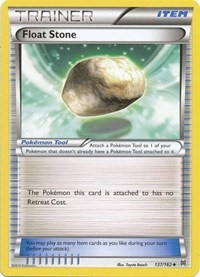
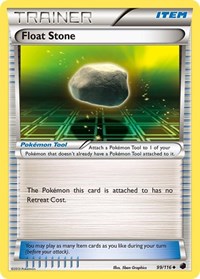
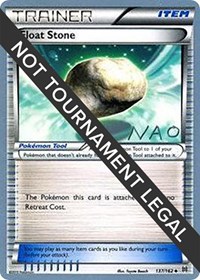
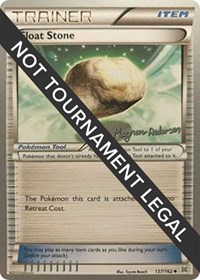
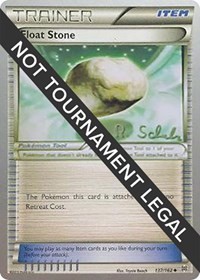
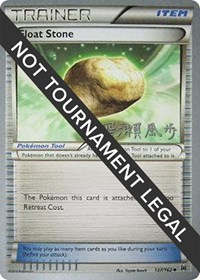
Float Stone 137/162 BREAKthrough Reverse Holo (Reverse Holofoil). TCGplayer market price: $6.58 as of Oct 1, 2026. Recorded price history: 967 daily market-price observations, Feb 8, 2024 to Oct 1, 2026. 12-month recorded market-price range: $6.39 – $7.16. TCGplayer lowest listed ask: $4.35 as of Oct 1, 2026, across conditions, before shipping. TCGplayer listed median: $6.84 as of Oct 1, 2026. Pokespective interest score: 24 out of 100 (Quiet); It ranks above 24% of the cards we track. 60-day price forecast: An estimated 33% chance of beating the typical tracked card over 60 days; in a typical outcome it would end about 2.9% behind. Four times in five the price lands between $6.12 and $7.50. This card's pricing is flagged, so treat the forecast as unusable rather than merely uncertain. 60-day forecast: Likely range: $6.12 – $7.50; 8 in 10 outcomes. 60-day forecast: Middle half: $6.38 – $6.98; half of outcomes land here. 60-day forecast: Typical outcome: $6.64; -2.9% versus the market. 60-day forecast: Confidence: 88 / 100; a narrow range, not a better outcome.
Beating the market, or just riding it?
Not enough trading to say
It trades too rarely, or has too little recent price history, for a 2-month comparison with the market to mean anything.
Describes the last 2 months, not what happens next. Not investment advice.
Is this card interesting right now?
Quiet - 24 out of 100
It ranks above 24% of the cards we track. The score describes the conditions around the card today - how sellers are pricing it, how it is trending, how steadily it trades. Its weights were tuned on how cards moved over the following 60 days, so a high score is a tendency across many cards, not a forecast for this one - and it says nothing about whether you will enjoy owning the card.
Why is it interesting?
Softer recent move than most and very steady price
The recent move is within this card's normal range, but weaker than most cards' moves this month. The price moves in small, calm steps rather than lurching around.
Is it becoming more popular?
No - losing ground
Compared with the Pokemon market as a whole, so a rising tide does not count as popularity. In this market these trends have tended to keep going rather than reverse.
Past month-6.0%
Past 2 months-7.1%
Past 4 months-20.2%
Is it expensive or cheap?
$6.58 - expensive for its set
At $6.58 it is one of the priciest cards in its set - number 30 of 302 by price. It costs more than 87% of other Uncommon cards we track. It is 8% below its 12-month high. Worth knowing: in this market cards near their highs have gone on to do better than deeply discounted ones, so a big discount is not automatically a bargain.
What makes this card unusual?
An ordinary Uncommon from a 11-year-old set
Uncommon is a widely printed rarity - 11,470 tracked cards share it. This is the Reverse Holofoil printing, which is priced as a completely separate market from the other printings of the same artwork. The set is about 11 years old, so surviving copies in good condition get scarcer over time.
Could you actually buy or sell it?
Slowly - it rarely trades
The price changed in 17% of our checks over the past year across 365 observations. TCGplayer's market price only updates when a copy sells, so a low figure means the price shown may be stale and any trend reading is built on very few real sales.
How does the grading fee compare?
Fee exceeds raw price
A roughly $22.00 grading fee is 334% of the $6.58 raw price. Raw price plus fee comes to about $28.58, before shipping, insurance or selling costs. That is a cost comparison, not an estimate of a graded copy's value. We track raw ungraded prices only - no graded sales and no population data. We cannot assess this copy's condition or tell you what a PSA 10 is worth. Check condition and comparable graded sales before deciding whether grading would pay off.
TCGplayer market price on the last day we have for each month; the current month so far.